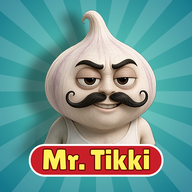
Aluganj’s cast turns familiar vegetables into neighbors with distinct jobs and habits. Alumia is a potato running a tea stall, Tommy is a curious tomato detective, and Morich is a lively chili. The visual joke gives families an easy place to begin drawing and storytelling. It does not need to become a lesson about eating vegetables, and it should not be used to pressure a child about food. Keep the play on paper, follow the child’s ideas, and let the cast be funny fictional characters first.
Look for shapes before names
Choose one printable character sheet and ask what shapes your child notices. They may see a rounded body, a tall hat, or a long curved outline. Put a blank sheet beside the character and try a few large shapes together. There is no need to copy the picture accurately. An adult can draw an oval while the child adds marks or a face. If the child wants to make a square potato or a blue tomato, that is an imaginative choice rather than an error to correct.
Meet the seven neighbors
The main cast includes Alumia the potato, Potol Bou, Tommy the tomato, Morich the chili, Roshun Chacha the garlic, Begun Shaheb the eggplant, and Korola Dadi the bitter gourd. Names and vegetable words may be more familiar in one family language than another. Use the words your family knows and check anything unfamiliar rather than pretending every translation is obvious. Point out differences in shape and costume, but do not suggest that a character’s vegetable determines a real person’s personality. The connections belong to this fictional village.
Give a drawing one ordinary job
After sketching a character, ask what they might do today. Keep the first job simple: finding a missing crayon, preparing a pretend picnic, or making a shop sign. A small purpose gives the drawing somewhere to go without requiring a full story. Your child can dictate a sentence and watch you write it below the picture. Ask before adding your own details. If they prefer to color silently, leave the question aside. The character does not need a written biography to become part of a satisfying art session.
Sort pictures by visible features
Lay out two or three character drawings and sort them by a feature you can actually see: tall and short outlines, hats and no hats, or colors your child selected. Then invite a different sorting rule. Avoid categories such as good and naughty, which flatten the stories into labels. A character can behave differently in different situations. If a drawing fits both groups, acknowledge that your sorting rule needs changing. The activity works best as an experiment in choosing a rule, not as a test with one hidden correct arrangement.
Turn a paper shop into a conversation
Alumia’s stall provides a setting for requests, waiting, and invitations. Use empty cups, folded menus, and paper customers. After hearing “Begun Shaheb’s Magic Words,” let one customer ask for a pretend item and another respond. Please and thank you can make an exchange courteous, but saying please does not require the shopkeeper to agree to everything. Add an ordinary limit, such as a menu item that is not available. Invite your child to suggest another choice rather than treating the polite phrase as a guarantee of getting what they want.
Use the printables without buying supplies
The free pack contains eight pages, including seven character sheets and a village sheet. Print one at a time if that suits your household. Crayons and reused paper are enough; decorative eyes, small beads, and other loose accessories are unnecessary. Adults should handle any cutting or stapling if pictures become props. Keep the images flat on the table if a child is likely to put small pieces in their mouth. A simple page can become a sign, a character card, or a backdrop without being turned into an elaborate craft.
Distinguish the original from a new invention
Your child might give Tommy a spaceship or make Korola Dadi open a library. Enjoy the idea while naming it as their new story. The original app offers twelve particular stories; not every invented event belongs to them. This distinction also gives adults permission to create without claiming that a new detail was part of the published series. Try keeping one sheet for “What happened in the story” and another for “Our new adventure.” The pictures can be equally valued even though they serve different purposes.
Keep food decisions separate from character play
A funny vegetable character does not obligate anyone to taste the real vegetable. If you connect the drawing to a grocery picture or a whole vegetable an adult is handling, keep the observation simple: shape, name, or color. Adults manage preparation and kitchen safety. Do not promise that playing with characters will change eating habits or use their stories to negotiate bites. End with the activity your child chose: a picture, a pretend stall, or a new character. The useful outcome here is shared play, not a changed plate.