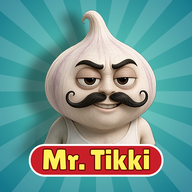
A small app session is easier to finish when everyone knows what comes next. Mr. Tikki offers coloring, read-aloud stories, and stickers, but none of those features needs to become a reason to continue indefinitely. This guide helps adults choose a clear activity, agree on an ending, and connect the screen experience to ordinary paper play. It does not prescribe a universal daily screen-time allowance or offer medical advice. Use the plan that fits your family’s circumstances and any guidance you already follow.
The first three sheets in the free Mr. Tikki coloring pack show Alumia, Potol Bou, and Tommy the Detective. Each page can be colored on its own, but together they make a useful starting point for a pretend tea stall, a saving game, and a clue hunt. You do not need to complete all three activities. Pick the one your child likes, print only the sheets you need, and leave space for a picture that looks entirely different from the cartoon.
Pages four to seven of the Mr. Tikki coloring pack introduce four different personalities: hurried Morich, scheming Roshun Chacha, proud Begun Shaheb, and wise Korola Dadi. Use the pictures to invite conversation about characters’ choices, not to sort real children into good and bad types. Each character can make mistakes, help someone, or try a different response. The following paper activities connect the sheets to actual app stories while leaving plenty of space for your child to invent their own scenes.
The Mr. Tikki app contains twelve short stories with English and Bangla narration. Families can use both languages without translating every sentence or turning listening into a lesson. Start with the language your child wants to hear, keep the session short enough to enjoy, and make room for mixed-language answers. This guide offers a repeatable routine using familiar stories about kindness, helping, and trying again. Its purpose is shared conversation, not a promise about reading levels or language development.
In “Tommy and the Tiny Footprints,” Begun Shaheb notices missing sweets and immediately suspects Roshun Chacha. Tommy looks more carefully. Small footprints lead toward a window, and a crow on the roof has crumbs on its beak. The chief realizes he blamed the wrong friend. The story makes a useful distinction between noticing something, guessing what happened, and checking a guess. This guide turns that distinction into a calm paper-based detective game, with no real accusations or missing possessions needed.
Roshun Chacha finds an ordinary shiny stone and tries to sell it to Alumia as magical gold. Alumia asks Korola Dadi to look at it, and the claim quickly falls apart. Roshun apologizes. “Roshun Chacha’s Shiny Stone” gives families a small, concrete example of a claim that is not true and a chance to practice putting things right. Keep the conversation about what characters say and do, rather than labeling your child or another person as a liar.
Waiting is easier to discuss when nobody is already upset. In the Mr. Tikki story “Morich and the Too-Hot Tea,” Morich hurries to Alumia’s stall, drinks too soon, and discovers that rushing has not helped. He pauses, counts, and waits before enjoying his drink. Use this short, funny story as a starting point for ordinary waiting moments, not as a test of whether your child can sit perfectly still. The activities below need paper, crayons, and a few minutes together.
In “Tommy’s Basket of Mangoes,” Tommy first imagines keeping a whole basket to herself, then notices Morich and Roshun Chacha nearby and chooses to share. The story ends with the friends eating together. It offers a cheerful invitation to talk about generosity, but it need not become a rule that children must surrender every treasured possession. This guide uses pretend mangoes, simple choices, and a shared picture to explore what sharing can look like when everybody knows the plan.
“The Big Storm and the Tea Stall Roof” begins with a problem Alumia cannot easily solve alone. His friends arrive, take different jobs, and raise the roof together. Families can explore that idea with a small paper model instead of copying the story’s building work. You will need paper, crayons, a shallow cardboard box, and large pieces of reusable tape. An adult handles any cutting. The goal is not a strong structure or a beautiful model; it is agreeing on a plan and noticing how different contributions fit together.
The eighth sheet in the Mr. Tikki printable pack, “Welcome to Aluganj!”, offers a starting point for a small shared village project. A family, pair of friends, or classroom group can build a paper setting around it and decide how the neighbors use their shared space. This guide links the page with “The Messy Market” and “The Big Storm and the Tea Stall Roof.” You need paper, coloring tools, and a clear table; construction tools, real rubbish, and elaborate craft supplies are unnecessary.